PostHog combines analytics with session replay, feature flags, experiments, and other product tools. Jelto focuses on website performance, desktop adoption and retention, and revenue for teams shipping software.
Jelto vs PostHog: features, collection, hosting, and pricing
What you need
Jelto
PostHog
Website analytics
JeltoTraffic, pages, campaigns, goals, and website visit funnels.
PostHogWeb analytics alongside a wider event-based product analytics platform.
Desktop apps
JeltoSwift, Electron, Tauri, and .NET SDKs. Active installs, version adoption, and retention.
PostHogMultiple SDKs and APIs for application instrumentation; platform support varies by tool.
Goals & funnels
JeltoRegistered events and ordered steps within a website visit.
PostHogFunnels, retention, and other configurable product analytics reports.
Revenue
JeltoStripe, Lemon Squeezy, Polar, and a Payments API. Aggregate channel attribution needs checkout setup.
PostHogRevenue analysis within its broader analytics and data integration tools.
Collection choices
JeltoCookieless by default. Cookie mode and attribution memory are optional. IP addresses are never stored.
PostHogCollection and identification depend on SDK configuration and the tools you enable.
Hosting
JeltoManaged Jelto service, with your website and desktop reports in one dashboard.
PostHogManaged PostHog Cloud offering.
Pricing model
JeltoStarter and Growth plans include both pageviews and monthly active installs. Monthly or yearly billing.View Jelto pricing
PostHogUsage-based pricing by product, with free allowances. Review the tools you intend to enable.View PostHog pricing
Reviewed September 8, 2026. Features and plans can change. Official sources
Example workflows
Using Jelto and PostHog
Two practical decisions, with steps from each product’s documentation.
01
Do you need a website funnel or a custom product funnel?
You want to find drop-off between a pricing page and a successful action.
How to decideJelto fits a focused website visit funnel. PostHog fits configurable product analysis when your team wants to define its own event model and questions.
Compare setup steps: Do you need a website funnel or a custom product funnel?
In Jelto
Build a website funnel from pages and registered goals. Read how visits progress through the ordered steps. A checkout-named browser goal remains an action; payment revenue is measured separately.
Create a PostHog funnel insight from the events or actions your product sends. Configure the conversion window and use filters or breakdowns to investigate the product behavior you need.
Are installations returning, or are accounts repeating an action?
Your team needs to choose a meaningful retention definition for its software.
How to decideJelto provides a dedicated installation view. PostHog gives you configurable event-based retention. Neither report should be treated as equivalent without matching the counting unit and return criteria.
Compare setup steps: Are installations returning, or are accounts repeating an action?
In Jelto
Use the desktop SDK and read D1, D7, or D30 install retention. Review Version adoption alongside it to understand the active installed base after a release.
Create a retention insight with a start event and a return event. Choose the period and whether you are analyzing users or supported groups, then use properties to break down the result.
For software teams, the next question is what happens after installation.
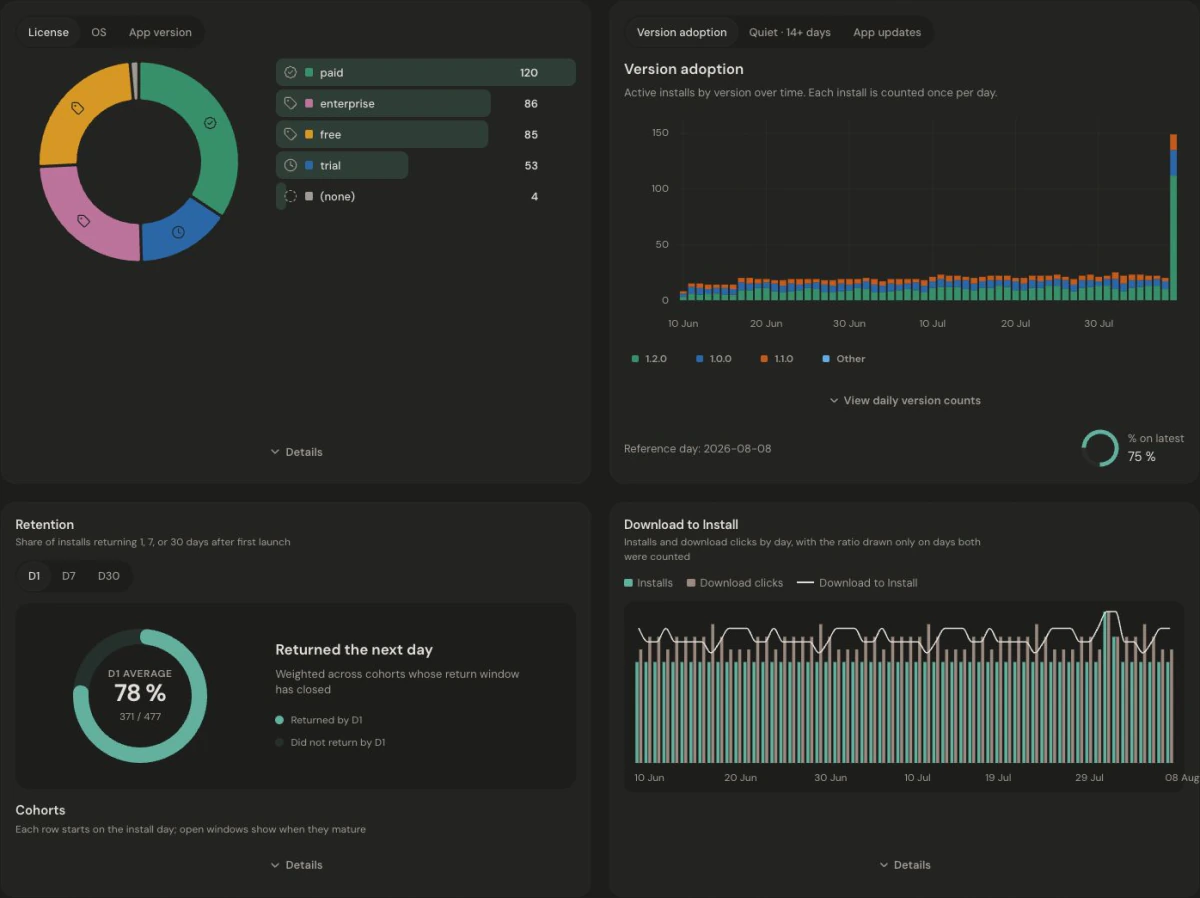
Sample data · Actual Jelto dashboardCaptured September 9, 2026
Website visits and app installs are not joined at the individual or marketing-channel level. Download to Install compares period totals; it is not a person-by-person conversion funnel. Read the app metric definitions.
How desktop metrics are counted
Active installs
Distinct installations that sent activity during the selected range. A reinstall is another install.
Version adoption
Active installs grouped by their latest reported version on the reference day. “% on latest” uses your configured latest version.
D1, D7, and D30 retention
Eligible installations that returned on the measured day. A cohort needs time to mature; unavailable does not mean zero.
Make the move
Switching from PostHog to Jelto
Separate reporting needs from operational tools such as feature flags. Add Jelto’s website snippet or desktop SDK, then verify the events and activity reports you need. Keep any PostHog tools that remain part of your application’s behavior.
Keep access to your existing history. These steps set up new collection; they do not import your PostHog reports.
PostHog prices usage by product and offers free allowances. Estimate each tool you plan to use, such as analytics and replay. Jelto’s plans include pageviews and monthly active installs; they do not replace operational tools such as feature flags.
Does Jelto replace PostHog feature flags?
No. Jelto is an analytics product, and this setup does not replace feature flags, experiments, or session replay. Evaluate those dependencies separately from your reporting needs.
Can I use both tools?
You can keep PostHog for tools you depend on and use Jelto for reporting. Review what each integration collects and configure your disclosures and collection choices accordingly.
Is desktop retention based on identified people?
Jelto reports returning installations, not identified people. Website and app data are not joined into a person-level journey.